
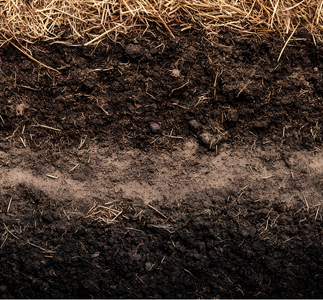
The safe bearing capacity of soil refers to the maximum load per unit area that the soil can safely support without risk of shear failure or excessive settlement, ensuring stability of structures built on it. It depends on various factors including soil type, composition, moisture content, and depth. Typically, the safe bearing capacity is determined through field tests such as Standard Penetration Test (SPT), Cone Penetration Test (CPT), or plate load tests, and is expressed in units of kPa or tons per square meter. For common soil types, safe bearing capacities vary widely, for example, about 150 kPa for loose sand, 200-300 kPa for clay, and up to 300-600 kPa for dense, well-compacted soils, but precise values must be obtained through proper geotechnical investigation to ensure the safety and stability of foundations.